

University of Pécs
StateMedicine
A cultural city home to Hungary's oldest university
Pécs is the seat of Baranya county and Hungary's 5th largest city, with a population of 139,412 as of 1 January 2025. The Romans founded it at the beginning of the 2nd century AD under the name Sopianae. The medieval city appears in writing for the first time in 871, as Quinque Basilicae.
In the 4th century AD Sopianae became the capital of the Roman province of Valeria and an early Christian centre; its Early Christian Necropolis was inscribed on the UNESCO World Heritage List in 2000. The bishopric of Pécs was founded in 1009 by Stephen I. In 1367 King Louis I the Great founded a university here, the first in Hungary and the fourth in Central Europe.
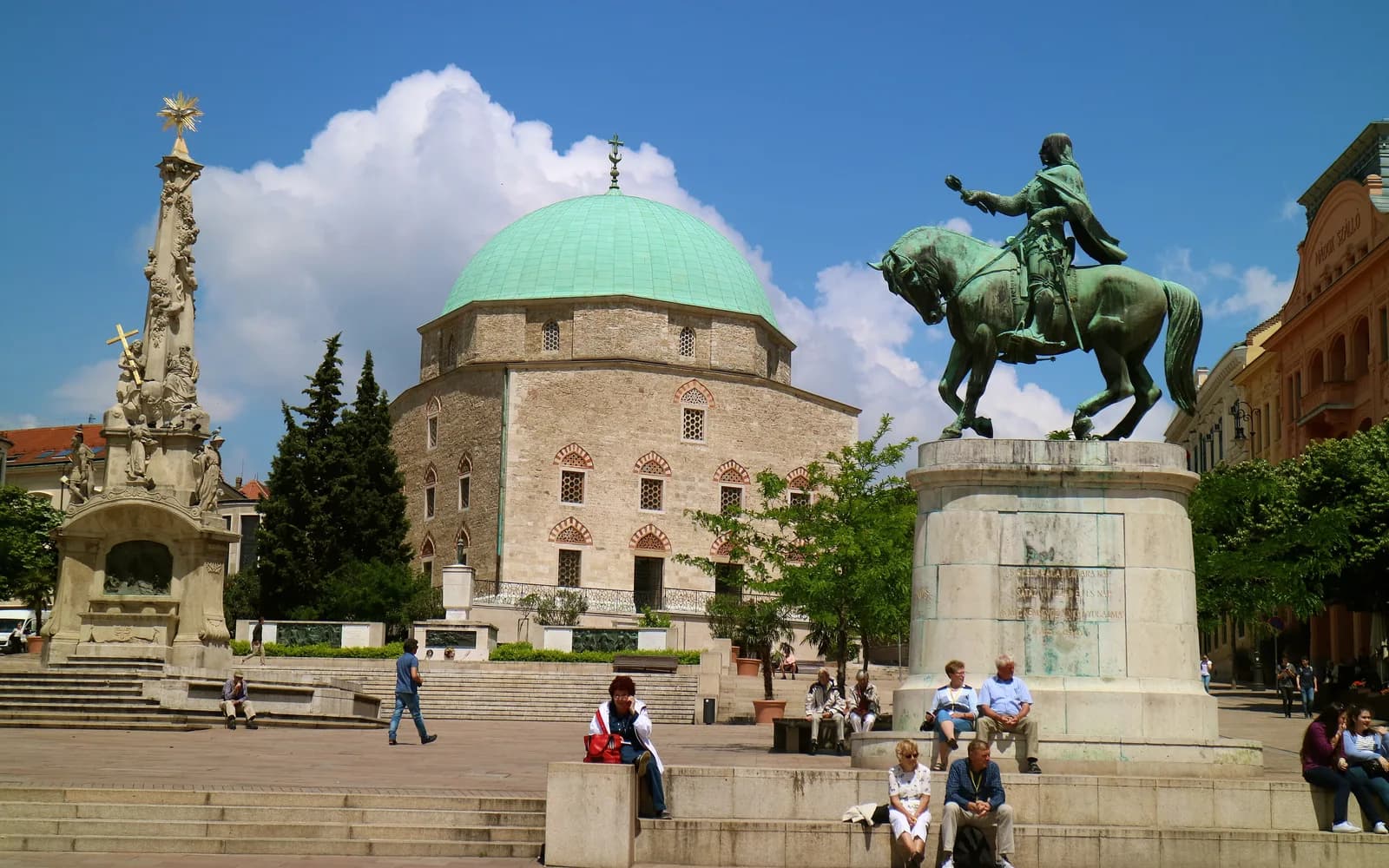
In June 1543 the bishop handed over the keys and the city passed to the Ottomans, who held it until 1686. The Mosque of Pasha Qasim was built between 1543 and 1546 and the Yakovalı Hasan Paşa Mosque in the 17th century; both still stand. During the 1686 siege the Austrian army occupied the city on 14 October and destroyed the aqueduct, and the Ottoman garrison surrendered on 22 October. The Zsolnay ceramics factory was founded in 1853 by Miklós Zsolnay, joined by his son Vilmos in 1863; it put pyrogranite into production by 1886 and introduced the eosin glaze in 1893. Pécs also worked a coal mine and a uranium mine, and only a sand mine remains today. Soviet forces captured the city on 29 November 1944, and in 2010 Pécs was European Capital of Culture alongside Essen and Istanbul.
The rest of the monthly budget, in euros, looks like this: housing 220-275 EUR, food 138-275 EUR, and transport 11-21 EUR. A typical all in month comes to 571 EUR. That figure assumes a student with their own room in a shared flat, cooking at home most days and using the discounted student transport pass, with bills, phone, course materials and a normal amount of social spending included.
City transport is buses only, run by Tüke Busz: 80 daytime routes and 7 night routes, about 148 buses, 514 stops, a 150 km network and over 33 million passengers a year. A tram ran from 1914 to 1960 and no longer exists, and there is no metro or trolleybus. A single ticket costs 500 HUF bought in advance and 600 HUF from the driver. The student monthly pass is 4,100 HUF, or 3,900 HUF with a photo-ID Tüke Card, available from age 14 with a valid student ID. Intercity trains run from the main railway station, built in 1900, and Pécs-Pogány International Airport opened in March 2006.
The figures here are a starting point for a budget; what a given month actually costs depends on the flat and the programme. If you would like to plan an application to the University of Pécs, work through the calendar and compare housing options for your own situation, we are glad to help. Get in touch and we will map it out with you.
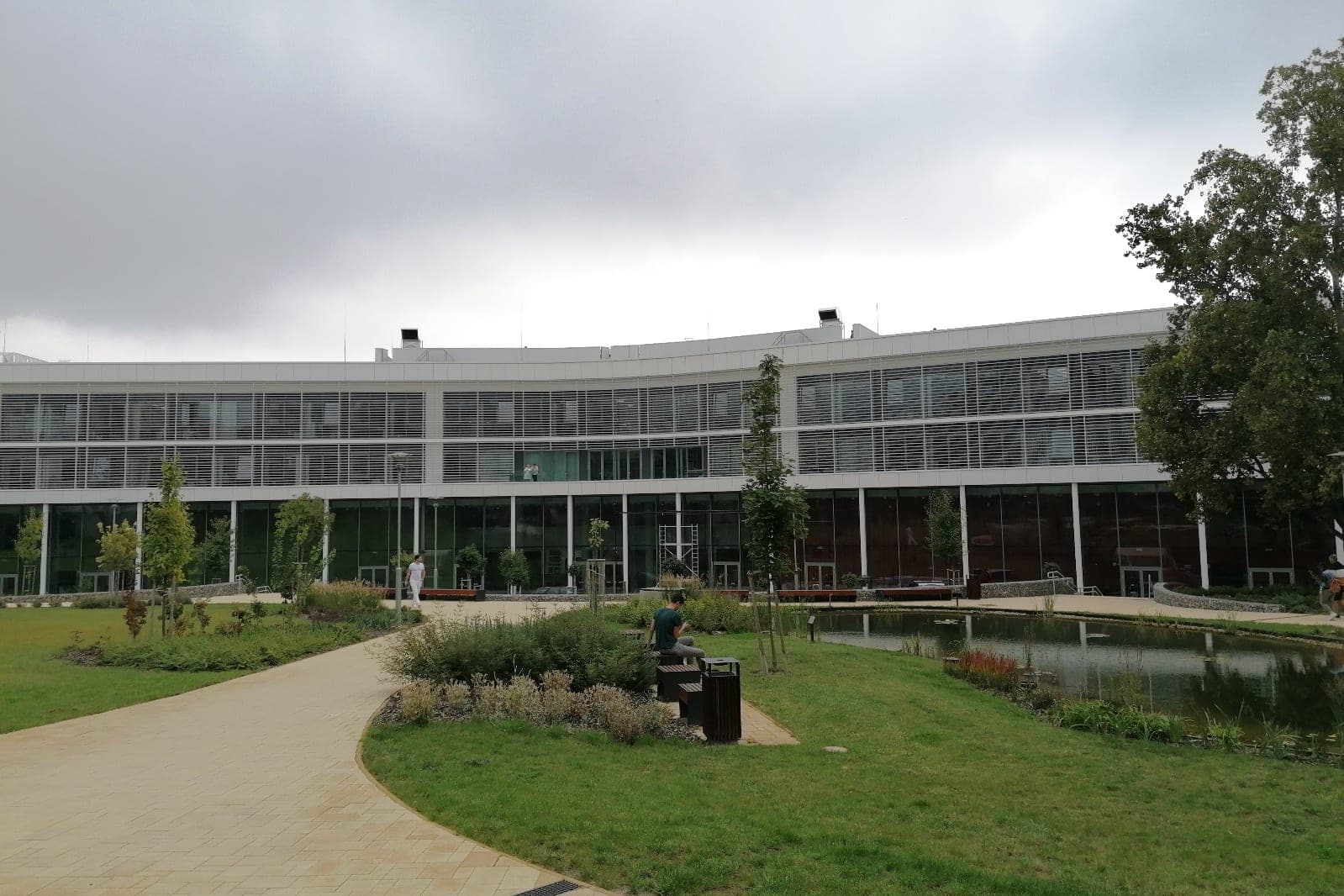
The one institution we list in the city is the University of Pécs, a state university. It dates its origin to the school founded in 1367 and marked 650 years in 2017; the present legal entity was formed in 2000. The university states that it has close to 25,000 students and more than 2,400 teaching and research staff across 10 faculties. For 2021 the figure given is approximately 22,325 students, of whom about 5,700 were enrolled in English or German language programmes.
A place in a shared flat runs 80,000-100,000 HUF a month per student. For a flat of one's own, two one-room flats were listed in Pécs in September 2026: 36 m2 in postcode 7621 at 160,000 HUF, and 38 m2 in postcode 7624 at 170,000 HUF. Both figures are the rent for the whole flat, which is what a single occupant pays.